B, Slender and Broad
The first Irish consonant is B, but it sounds different from the English “B”.
Like all Irish consonants (except h) it can be slender or broad.
We’ll practice both sounds step-by-step, so you can recognize and pronounce “B” correctly in Irish.
We’ll keep it simple and stick with B at the start of a word.
Learn

The Three Bs
Irish slender B is higher pitched / lighter than the basic B of English.
Irish broad B is lower pitched / darker than the basic B of English.
The tracks will play automatically, one after another.
Focus on the change in sound between them, rather than the individual sounds.
b
Slender
b
Basic
b
Broad
Slender B
At the start of a word, a slender B is followed by an e or an i.
The word beo (meaning “alive/existing”) has a slender B.
Try and say ‘b’ and ‘yo’ together, quickly, to get an idea of how it sounds.
Listen to what it actually sounds like:
And how do you make this slender B sound?
First, pull your lips slightly back across your face.


Then say the English word “bee”.
Bee. Bee. Bee.
Next, push the middle of your tongue straight up to the top of your mouth as you say “b”.
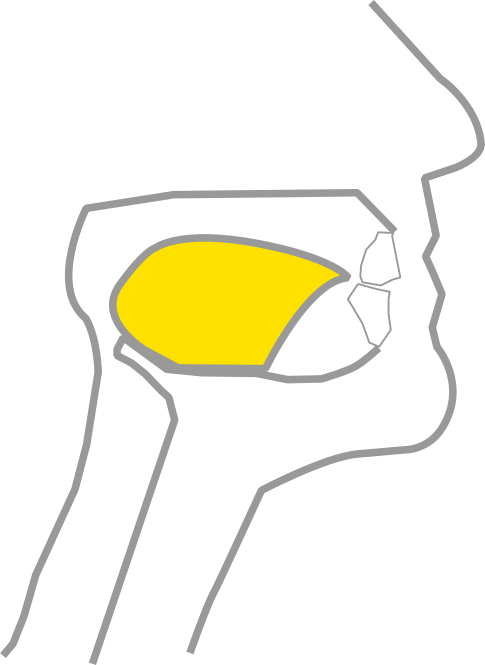
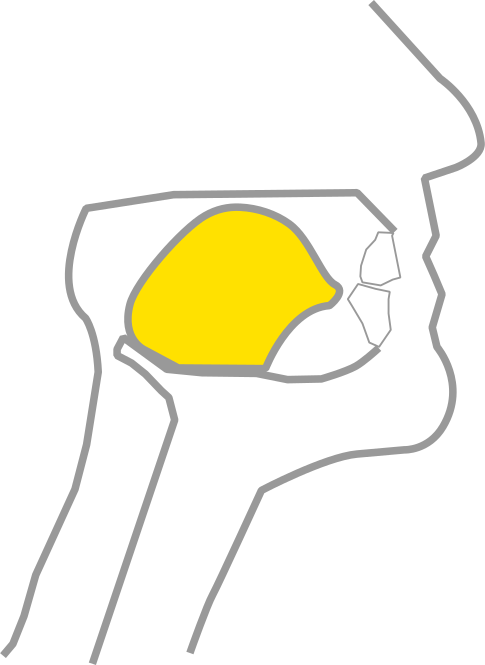
Again, say the English word “bee”, but involving your tongue this time.
Bee. Bee. Bee.
This gives the consonant a slightly “softened” quality—like the “y” in the English word “yes”.
This softening of the consonant with the tongue is called palatalization.
In summary:
-
Lips first
Pull your lips slightly back across your face. -
Try the sound
Say the English word “bee”. -
Tongue next
Push the middle of your tongue straight up to the top of your mouth. -
Combine lips and tongue
Say “bee” again, using both lips and tongue.Bee. Bee. Bee.
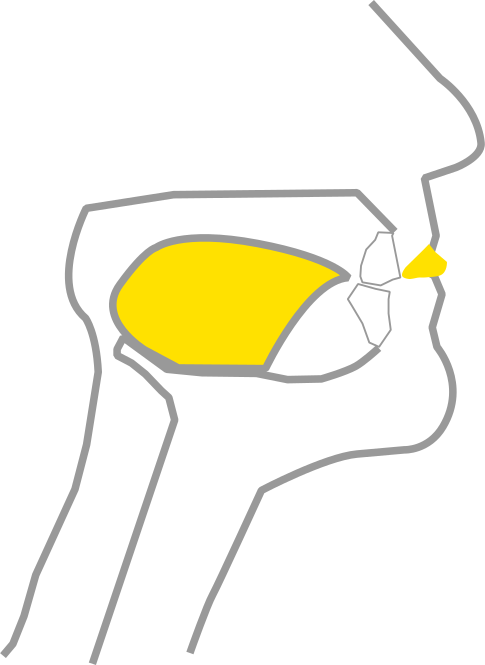
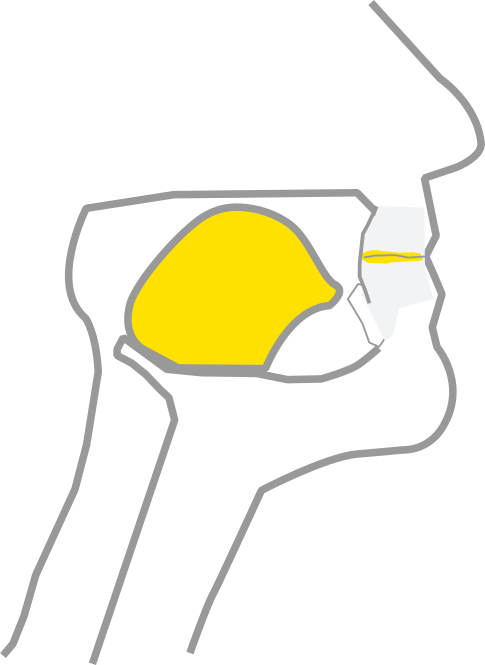
Now, try and say the slender B in beo:
Broad B
At the start of a word, a broad B is followed by an a, o or u.
The word bó (“cow”) has a broad B.
The English word “bow” (as in “bow tie”) is close, except “bow” has a basic B.
The Irish word bó has a broad B.
Can you hear it?
How to make this broad B sound?
First, push your lips out and say “buh” in an exaggerated manner.

Buh. Buh. Buh.
Next, push the back of your tongue straight up to your throat when you say “buh”, keeping the tip of your tongue where it is.
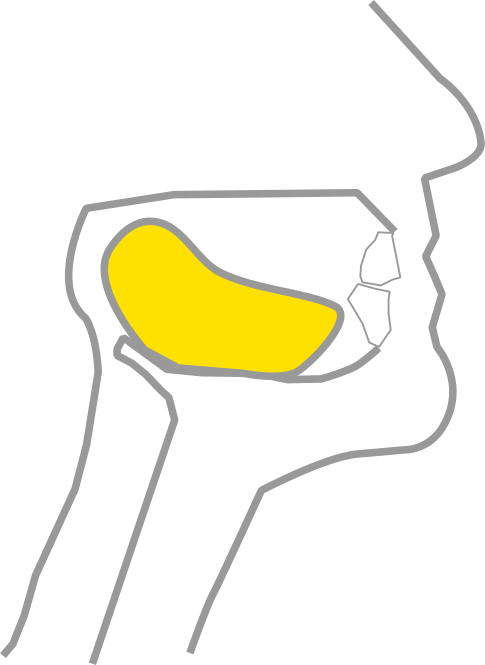
This is like the dark L in some English accents e.g. the L at the end of “full”.
(Irish accents typically use the “light L” in all cases, so see here for more details: youtube link)
In summary:
-
Lips first
Push your lips forward in a slightly exaggerated manner. -
Try the sound
Say the English word “buh”. -
Tongue next
Push the back of your tongue straight up to the back of your throat, making a “bwuh” sound. -
Combine lips and tongue
Say “bwuh” again, using both lips and tongue.Bwuh. Bwuh. Bwuh.
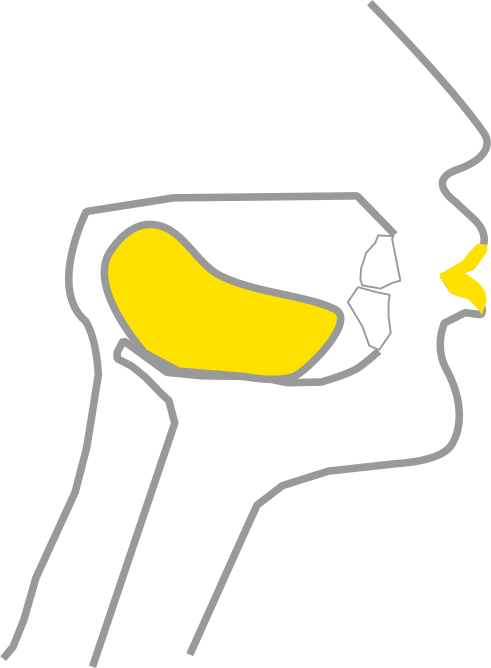
Now say the broad B in bó:
Summary
Irish has two Bs: one slender, one broad.
At the start of a word:
- slender B is followed by e or i.
- broad B is followed by a, o or u.
Irish slender B is higher pitched / lighter than the basic B of English. You make the sound by:
- Pulling your lips back, and
- Move the middle of your tongue straight up to the roof of your mouth (palatization).
The Irish word beo ( “alive/existing”) has a slender B.
Irish broad B is lower pitched / darker than the basic B of English. You make the sound by:
- Pushing your lips forward, and
- Pushing the back of your tongue to the roof of your mouth, at the throat (velarization).
The Irish word bó (“cow”) has a broad B.
Enjoyed this Lesson?
Sign up for more FREE lessons.
Tell your friends, share on social media—spread the word!
Error
Seems something went wrong.
Please check your inbox () for the confirmation email.
Please refresh the page and try again, or reach out to hello@learning.irish.