C
In English, the letter C can be:
- hard C /k/ e.g. cat,
- soft c /s/ e.g. city,
- Italianate c /tʃ/ e.g. cello, or
- sibilant c /ʃ/ e.g. ocean.
It can even be silent, e.g. muscle or indict.
Irish is much easier!
The letter C in Irish is always pronounced like the hard C in cat.
But, like almost all Irish consonants, this sound can appear in two forms: slender or broad.
This lesson will train your ear to hear the difference between slender and broad C.
Learn

The Two Cs
In Irish, the letter c has two forms: slender C and broad C.
Both are related to the hard C sound in English (like in cat), but Irish modifies them in consistent ways depending on the surrounding vowels.
At first, the difference might be hard to hear—that’s completely normal. This lesson will train your ear to recognize it.
Listen to the audio for both sounds and start getting familiar with how they differ.
Then, try the following quiz to see if you can tell them apart:
Slender C
The Irish slender C sounds like the hard C in cue, but with:
- the tongue pushed further forward, and
- said with a slight smile.
The slender C is written with an e or i either before or after it, for example: ce-, ic-. These vowels signal that the consonant is slender, not always representing a full vowel sound themselves.
First, say the English word cue:
Now modify this sound by pushing your tongue further forward when saying cue.
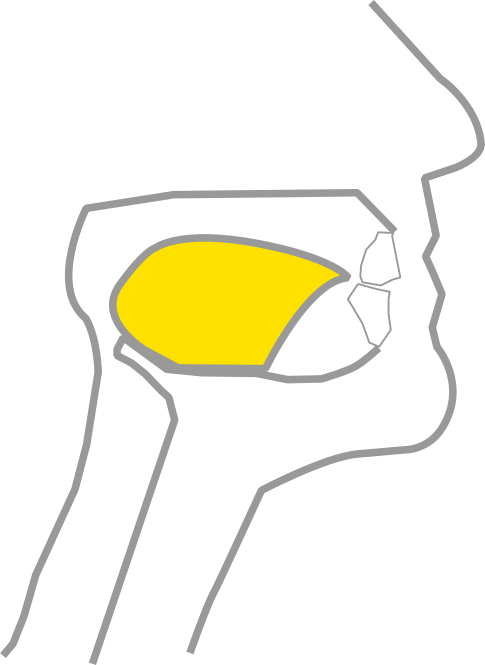
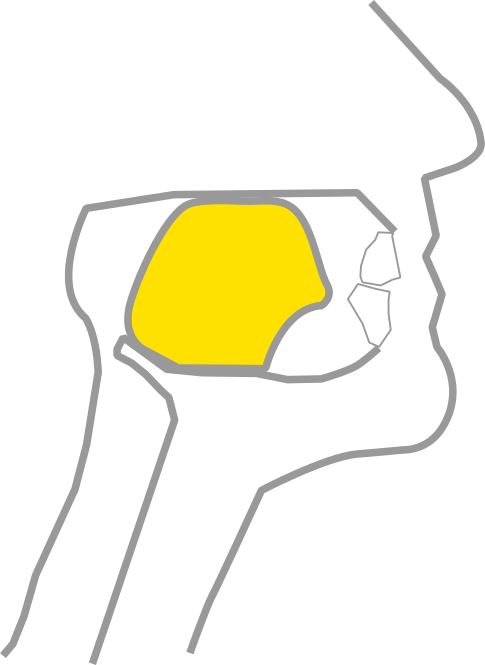
Your tongue rises toward the hard palate (the bony roof of your mouth), briefly stopping the airflow before releasing it.
Next pull your lips slightly back, as if you were smiling, while making the sound.


Smiling helps push the tongue forward in the mouth, which is exactly what we want for a slender Consonant.
Let’s hear what it sounds like when we make both changes at the same time:
And this is what it looks like when you make both changes at once:
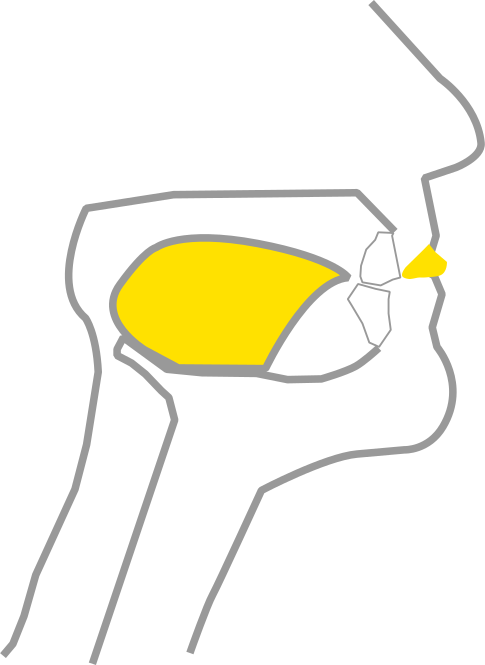
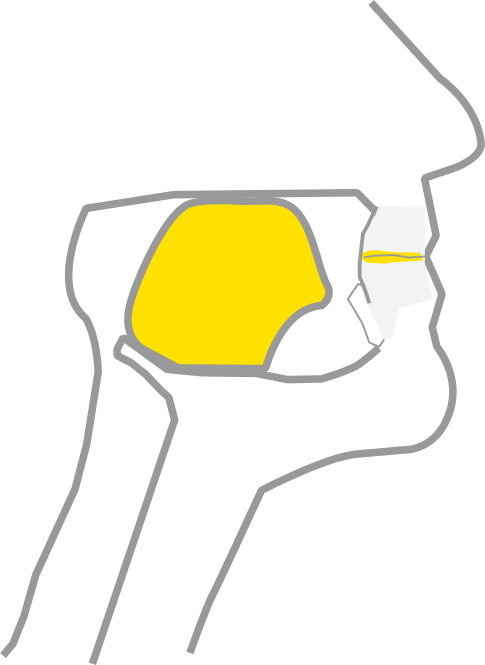
Even though cue is an English word, you are now producing the Irish slender C.
Let’s hear the word for music (ceol ) in Irish, which has the slender C:
More details
The voiceless palatal plosive is represented by the symbol /c/.
This sound does not exist in English.
However, a fronted k—like the c in cue—is close. Linguists write this sound as [k̟], and it is made further back in the mouth than [c].
While the English fronted k [k̟] does not move the tongue as far forward as the Irish slender C [c͍], it is an excellent starting point for learning the sound.
Broad C
The Irish broad C sounds like the hard C in caw (the sound a crow makes), but with:
- the tongue pulled further back, and
- the lips pushed forward.
The broad C is written with an a, o, or u either before or after it, for example ca-, oc-, cu-. These vowels signal that the consonant is broad, not always representing a full vowel sound themselves.
First, say the English word caw:
Now modify this sound by pushing your lips forward into a small circle.

Pushing your lips forward helps make the sound deeper. You can hear the difference when we say caw with our lips pushed forward:
Pushing our lips forward also prepares for the second step—pulling the tongue backwards.
Pull the back of your tongue upward toward the soft palate (the velum), almost as if the back of your tongue was being pulled up and back.
Linguists call this velarization.
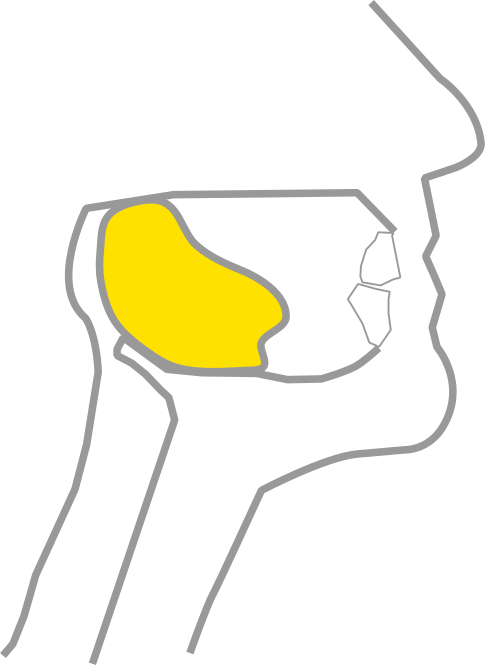
Let’s hear what it sounds like when we make both changes at the same time:
And this is what it looks like when you make both changes at once:
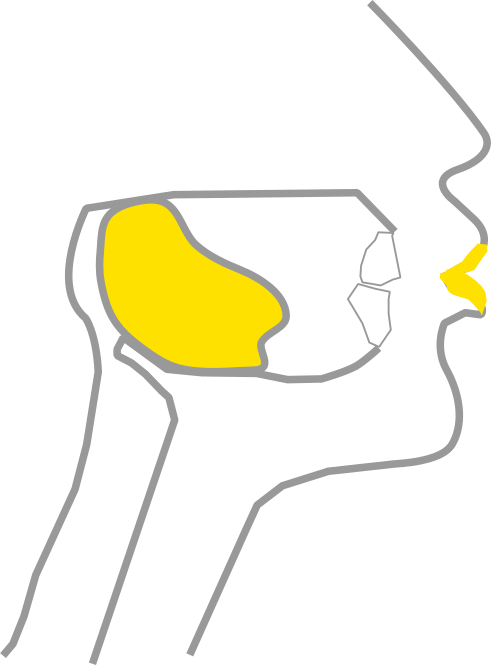
While it might feel silly to make this exaggerated caw sound, you are actually making the Irish broad C.
There is an English word kohl that refers to a form of eye makeup, and it is given in Irish as cól, with a broad C:
Summary
The Irish slender C sounds like the hard C in cue, but with:
- the tongue pushed further forward, and
- pronounced with a slight smile.
The slender C is written with an e or i either before or after it, for example: ce-, ci-. These vowels signal that the consonant is slender, not always representing a full vowel sound themselves.
The Irish broad C sounds like the hard C in caw (the sound a crow makes), but with:
- the tongue pulled further back, and
- the lips pushed forward.
The broad C is written with an a, o, or u either before or after it, for example: ca-, oc-, cu-. These vowels signal that the consonant is broad, not always representing a full vowel sound themselves.
There is a slender C in the Irish word ceol (music ) and a broad C in cól (kohl )—test yourself with this quiz, and see if you can hear the difference:
Enjoyed this Lesson?
Sign up for more FREE lessons.
Tell your friends, share on social media—spread the word!
Error
Seems something went wrong.
Please check your inbox () for the confirmation email.
Please refresh the page and try again, or reach out to hello@learning.irish.