D
In English, the letter ‘d’ is usually pronounced the same
In Irish, D has two distinct forms: slender and broad.
This lesson will train your ear to hear the difference between slender and broad D.
Learn

The Two Ds
In Irish, the letter ‘d’ has two forms: slender D and broad D.
While related to the normal D sound in English (like in dog), the Irish D sounds are distinct.
At first, the difference might be hard to hear—that’s completely normal. This lesson will train your ear to recognize it.
Listen to the audio for both sounds and start getting familiar with how they differ.
Then, try the following quiz to see if you can tell them apart:
Slender D
To English speakers, Irish slender D sounds closer to English J than English D.
Why?
Because Irish slender D is strongly palatalized, with the middle of the tongue raised toward the roof of the mouth.
Imagine an English D sound, but with:
- the middle of your tongue pushed against roof of your mouth, and
- tip of your tongue resting against the lower teeth, and
- said with a slight smile.
This sounds like a lot of things to do, just to say a D, but we’ll go through it step-by-step.
The slender D is written with an e or i either before or after it, for example: de-, id-. These vowels signal that the consonant is slender, not always representing a full vowel sound themselves.
For English D, the tip of your tongue touches the alveolar ridge—the bumpy ridge on the roof of your mouth right behind your upper front teeth.
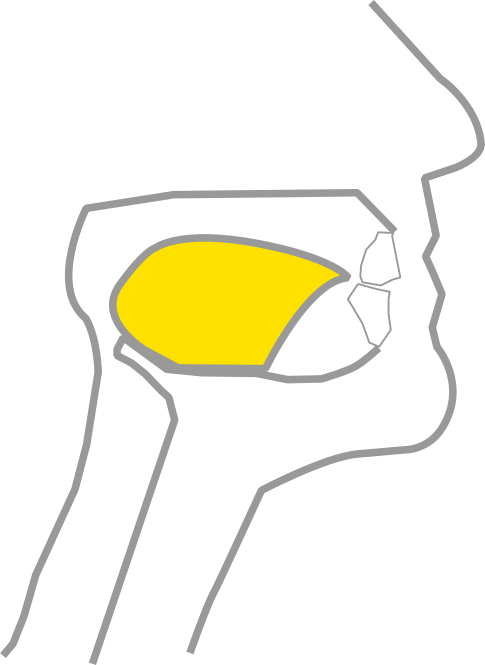
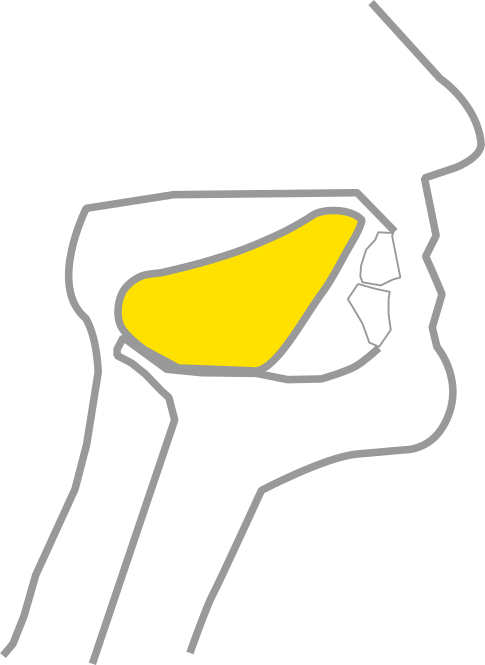
The Irish slender D is very different, and involves a tongue posture unusual for English speakers.
First, say the English word dew, with your lips in a neutral position:
Now, repeat it while pulling pull your lips slightly back, as if you were smiling.

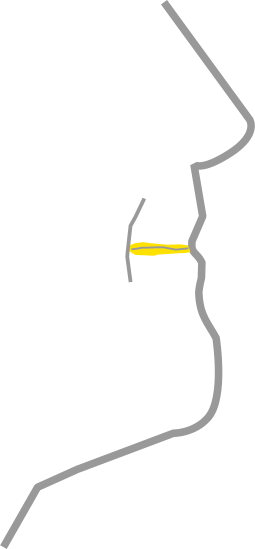
You might notice the sound becoming less like English D and more like the beginning of English J.
For English D, you put the tip of your tongue above your upper teeth (on the alveolar ridge).
But for Irish D, the tip of your tongue is placed behind your lower teeth.
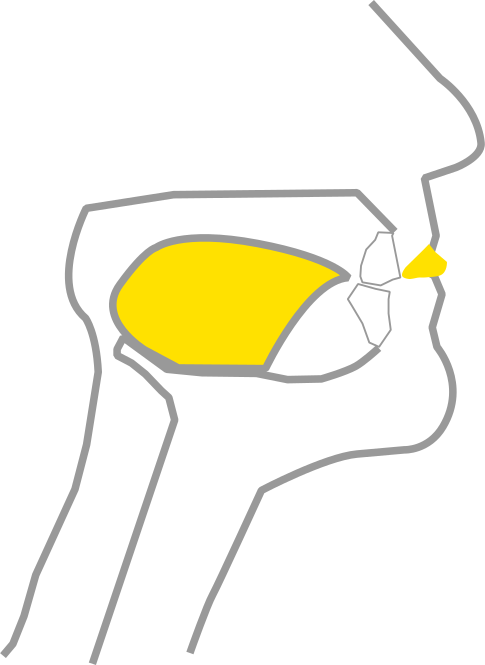
Then, the body of your tongue is raised toward the hard palate (the bony roof of your mouth), briefly stopping the airflow before releasing it.
You can see the difference in tongue position here for Irish slender D:
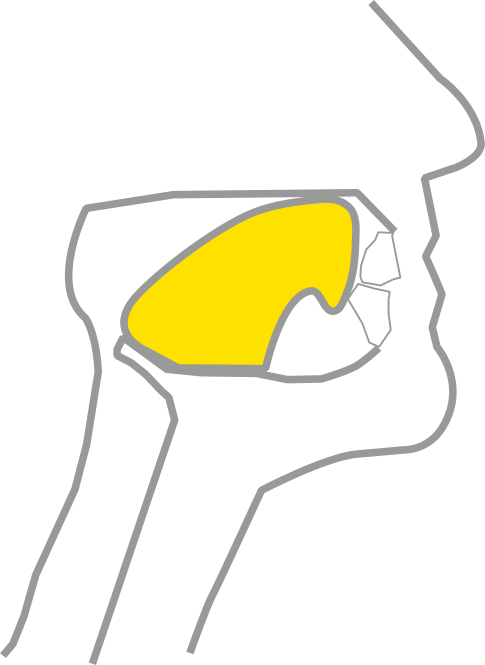
This is what it looks like when you make both changes at once:
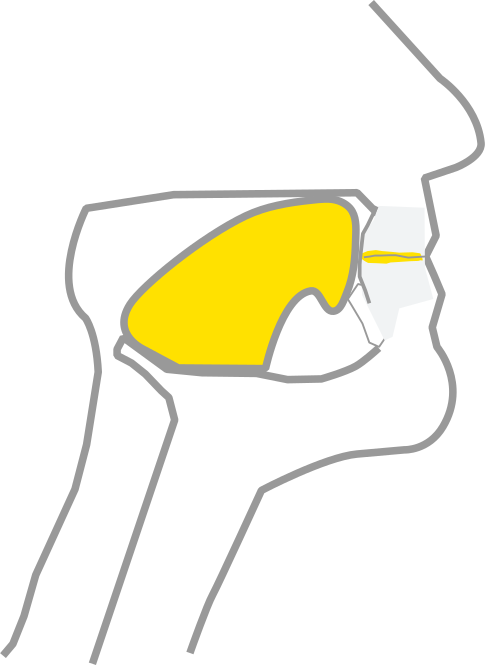
Let’s hear what it sounds like when we make both changes at the same time:
Even though you are saying the English word dew, you are no longer using an English D. You are now producing the Irish slender D.
Let’s hear the Irish word deo, which has the slender D:
Note: You’ll only hear this word in the phrase go deo, which means forever in English.
Why does deo only appear in go deo?
In modern Irish, deo does not exist as an independent word outside of the idiom go deo ( forever ). It is a fossilized noun from the Old/Middle Irish word dead, meaning the end or death.
English has a few fossil words e.g. kith in the phrase “kith and kin” (meaning “friends and family”).
Broad D
The Irish broad D is a D produced with:
- blade of tongue against upper teeth,
- back of tongue pulled slightly back, and
- the lips pushed slightly forward.
The broad D is written with an a, o, or u either before or after it, for example da-, od-, du-. These vowels signal that the consonant is broad, not always representing a full vowel sound themselves.
First, say the English word dough:
Now modify this sound by pushing your lips forward into a small circle.

You may notice the sound becoming slightly deeper when you push your lips forward:
Pushing our lips forward makes it easier to achieve the tongue posture used in the broad D.
Pull the back of your tongue slightly upward toward the soft palate (the velum), almost as if the back of your tongue was being pulled up and back.
At the same time, touch the upper teeth with the blade of your tongue (the flat, broad portion located just behind the tip).
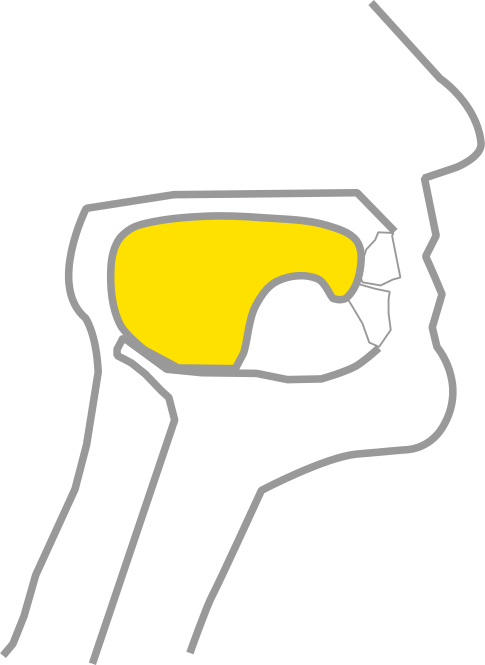
So, to make the broad D, keep all three changes in place:
- lips slightly forward,
- the back of the tongue pulled back, and
- the tongue blade touching the upper teeth.
Let’s hear what it sounds like when we make all three changes at the same time:
And this is what it looks like when you make all three changes at once:
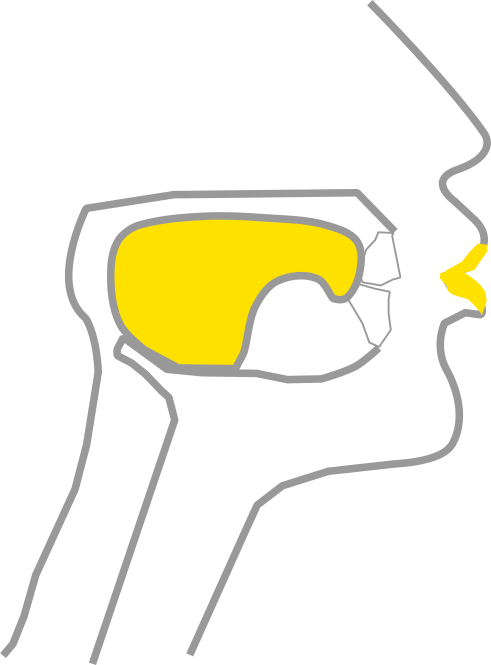
While it might feel silly to make this exaggerated dough sound, you are actually making the Irish broad D.
The Irish word for two is dó, and it starts with a broad D:
Summary
The Irish slender D is a D produced with:
- the middle of your tongue pushed against roof of your mouth, and
- tip of your tongue resting against the lower teeth, and
- said with a slight smile.
The slender D is written with an e or i either before or after it, for example: de-, id-. These vowels signal that the consonant is slender, not always representing a full vowel sound themselves.
The Irish broad D is a D produced with:
- blade of tongue against upper teeth,
- back of tongue pulled slightly back, and
- the lips pushed slightly forward.
The broad D is written with an a, o, or u either before or after it, for example da-, od-, du-. These vowels signal that the consonant is broad, not always representing a full vowel sound themselves.
There is a slender D in the Irish word deo, used in the phrase go deo ( forever) and a broad D in dó ( two)—test yourself with this quiz, and see if you can hear the difference:
Enjoyed this Lesson?
Sign up for more FREE lessons.
Tell your friends, share on social media—spread the word!
Error
Seems something went wrong.
Please check your inbox () for the confirmation email.
Please refresh the page and try again, or reach out to hello@learning.irish.